Asphalt driveways and parking lots generally benefit from sealcoating every 2 to 4 years, depending on pavement condition, traffic, weather exposure, and the type of maintenance previously performed. Busy commercial parking lots may need attention sooner than lightly used residential driveways. However, sealcoating should not be applied simply because a certain amount of time has passed. The surface should be inspected first to determine whether it needs sealcoating, crack repair, or more extensive asphalt work.
For homeowners and commercial property owners in Taylors, SC, regular asphalt maintenance can help protect pavement from moisture, sunlight, and everyday wear. Elite Asphalt Services offers sealcoating and related asphalt services to help property owners determine the right approach for their paved surfaces.
Why Is Asphalt Sealcoating Important?
Asphalt contains a binder that holds the aggregate materials together. Over time, sunlight, air, moisture, and vehicle traffic contribute to surface aging. Asphalt can gradually lose its dark appearance, become more brittle, and develop small cracks or loose surface material.
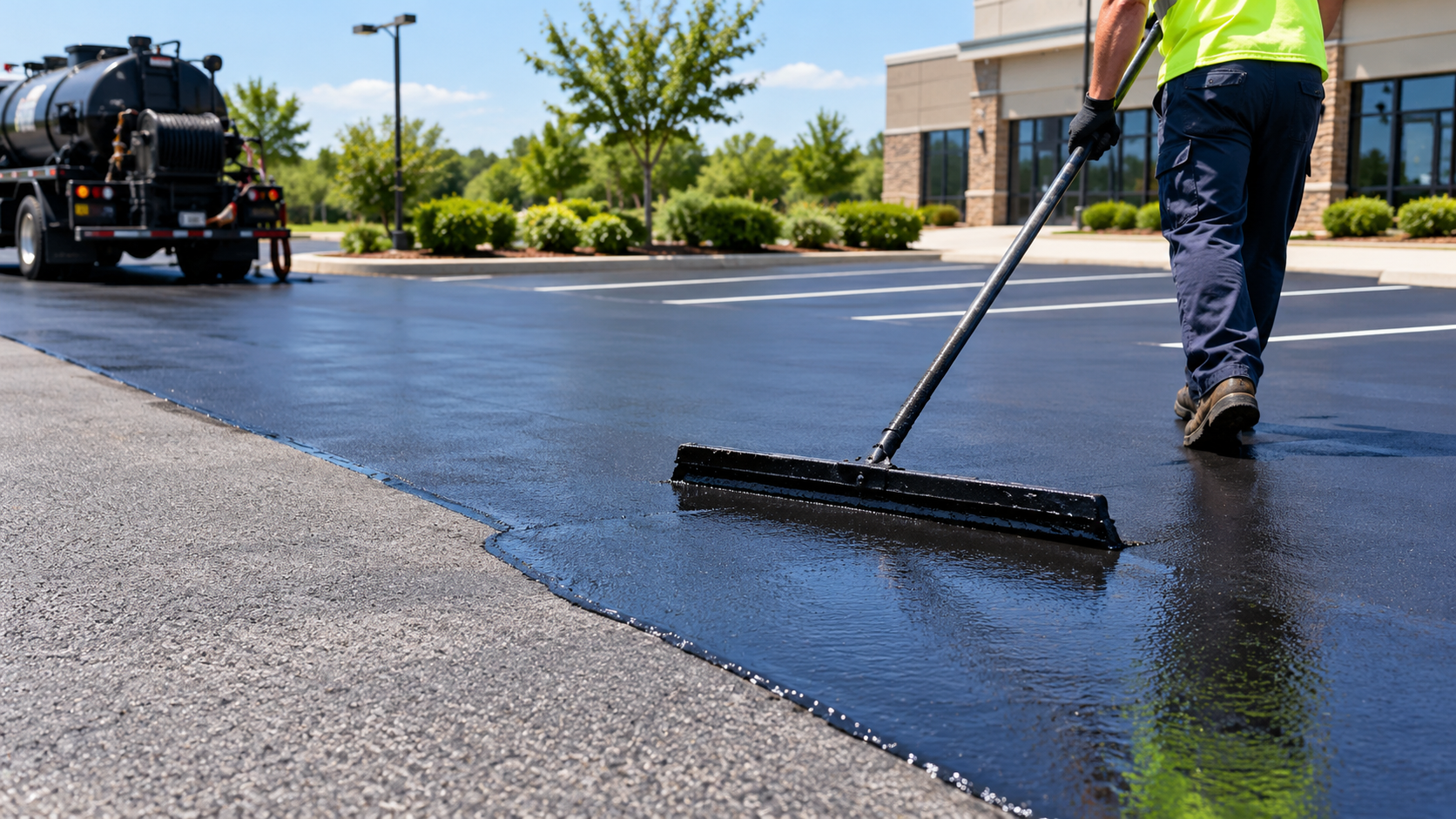
Sealcoating applies a protective layer over suitable asphalt pavement. It helps reduce surface exposure to weather and everyday wear while improving the pavement’s overall appearance. It can also provide a more uniform surface for parking lots and driveways.
Sealcoating is a preventive maintenance treatment, not a structural repair. It will not correct a failed pavement base, deep potholes, severe cracking, or drainage problems. Those issues should be assessed and repaired before a new coating is applied.
How Often Should You Sealcoat an Asphalt Driveway?
For many residential asphalt driveways, a sealcoating interval of approximately 2 to 4 years is a useful starting point. The right schedule depends on how the driveway is used and how well the existing pavement has held up.
A driveway used by only a few household vehicles may wear differently from one that regularly accommodates work trucks, trailers, or heavy vehicles. Driveways exposed to direct sunlight, standing water, or frequent vehicle fluid leaks may also need closer attention.
Homeowners should inspect their asphalt periodically for fading, surface dryness, small cracks, and loose aggregate. These signs may indicate that the pavement needs maintenance. If the driveway has larger cracks, potholes, or areas that feel unstable, repairs may be necessary before sealcoating.
How Often Should You Sealcoat a Commercial Parking Lot?
Commercial parking lots often require more frequent inspections because they handle a wider range of traffic and operating conditions. Depending on use and pavement condition, many parking lots are sealcoated every 2 to 4 years, although heavily used areas may require more frequent maintenance.
Parking lots at retail stores, offices, warehouses, and other business properties experience different demands. Turning vehicles, delivery trucks, repeated braking, and concentrated traffic can cause some sections to wear faster than others. Driving lanes and entrances may need attention before lightly used parking spaces.
A planned maintenance schedule helps property managers identify developing issues before they become larger projects. Before sealcoating, the contractor should assess cracks, potholes, drainage, and areas where the pavement is breaking apart. Repairs should be completed where needed so the new coating is applied to a suitable surface.
What Factors Affect Sealcoating Frequency?
The number of years between applications is only a guideline. Several factors influence when an asphalt surface is ready for another coat.
Traffic Volume and Vehicle Weight
Frequent traffic exposes asphalt to more wear. Commercial entrances, delivery routes, and turning areas may deteriorate faster than sections with lighter use. Heavier vehicles can also place greater demands on the pavement structure, particularly if the surface or underlying base was not designed for those loads.
Sunlight and Weather Exposure
Sunlight contributes to asphalt oxidation, which gradually hardens the binder. Rain and moisture can worsen existing pavement problems when water enters through cracks or damaged areas. Local weather patterns and the amount of exposure a surface receives can affect its maintenance needs.
Pavement Age and Existing Condition
Older asphalt may need more attention as it becomes dry, faded, or brittle. However, age alone does not determine whether sealcoating is appropriate. A relatively new surface may not need coating yet, while older pavement in good structural condition may still benefit from preventive maintenance.
Previous Sealcoating Work
The quality of the previous application, surface preparation, materials, and number of coats can affect how well the coating performs. Reapplying sealcoat too frequently is not necessarily better. Repeated layers can build up, wear unevenly, or peel if the surface is not properly prepared.
Drainage and Surface Damage
Water that collects in low areas can signal a drainage or grading problem. Sealcoating will not correct standing water, failed pavement, or damage beneath the asphalt. These conditions should be assessed before deciding on the next maintenance step.
What Are the Signs That Asphalt Needs Sealcoating?
Instead of relying only on a calendar, look for changes in the pavement’s appearance and condition. Common signs include:
- Fading or gray asphalt: The surface may be showing signs of oxidation and age.
- Small surface cracks: Fine cracks may indicate that the pavement needs maintenance and further assessment.
- Loose aggregate: Small stones coming away from the surface can indicate surface deterioration.
- Worn appearance: The pavement may look dry, uneven in color, or less uniform than before.
- Worn parking lot markings: Faded lines may mean the property needs restriping, although this is a separate maintenance task from sealcoating.
These signs do not automatically mean that sealcoating is the correct treatment. Larger cracks, potholes, widespread cracking, and soft or unstable areas should be evaluated to determine whether repair or resurfacing is needed.
When Should You Sealcoat New Asphalt?
New asphalt generally needs time to cure and age before its first sealcoating application. Applying sealcoat too early may interfere with proper surface performance.
The Asphalt Institute advises that well-designed, low-traffic asphalt driveways and parking lots generally should not require sealing for approximately 2 to 5 years, depending on climate severity and the quality of the original work. Other industry guidance recommends earlier initial treatment in certain circumstances, so there is no single timeline suitable for every pavement. The paving contractor’s recommendations, pavement condition, and sealcoat product instructions should guide the decision.
Before scheduling the first application, confirm that the asphalt is suitable for treatment and that any construction-related or drainage issues have been addressed.
What Should Be Done Before Sealcoating?
Proper preparation is important for a sealcoat to adhere evenly and perform as intended. Before the application, the pavement should be inspected and prepared according to its condition.
Typical preparation may include:
- Cleaning the surface: Remove dirt, leaves, loose debris, and other materials that could interfere with adhesion.
- Repairing cracks: Appropriate crack treatment helps address openings that sealcoat alone cannot reliably repair.
- Fixing potholes and damaged sections: Failed pavement should be repaired before the surrounding surface is coated.
- Addressing oil and fuel contamination: Contaminated areas may require special treatment to help the new coating bond properly.
- Checking drainage: Standing water and recurring drainage problems should be investigated before work begins.
- Confirming weather conditions: Temperature, humidity, and the forecast affect application and curing. The chosen product’s instructions should be followed.
For commercial parking lots, the work plan should also account for access, parking restrictions, and the time needed to keep vehicles off the treated pavement.
Is Sealcoating Enough to Fix Cracked or Damaged Asphalt?
No. Sealcoating is designed to protect and refresh the pavement surface, not rebuild damaged asphalt. Small surface cracks may be addressed as part of a maintenance plan, but they generally need appropriate crack treatment rather than simply being covered with sealcoat.
Potholes, deep cracks, widespread interconnected cracking, sinking areas, and recurring water damage may indicate more serious problems. Depending on the cause, the pavement may need patching, localized reconstruction, resurfacing, or a more extensive repair.
Choosing the right treatment matters. Applying a protective coating over unresolved damage can hide the problem temporarily without correcting the underlying cause.
How Elite Asphalt Services Can Help With Asphalt Maintenance
Elite Asphalt Services provides sealcoating and related asphalt services for residential and commercial properties. For property owners in Taylors, SC, these services can include asphalt paving, pothole repair, road repair, parking lot construction, line striping, and thermoplastic pavement marking.
Whether you’re maintaining a residential driveway or planning upkeep for a commercial parking lot, the first step is to understand the condition of the existing pavement. An assessment can help determine whether sealcoating is appropriate or whether repairs should be completed first.
Learn more about sealcoating services or contact Elite Asphalt Services at (864) 525-4146 to discuss your asphalt maintenance needs.
Frequently Asked Questions
Can I sealcoat my driveway every year?
Annual sealcoating is usually unnecessary and can cause excessive buildup if the pavement does not need another application. The appropriate interval depends on the surface condition, previous work, traffic, and product recommendations.
Should a parking lot be sealcoated more often than a driveway?
Not always, but commercial parking lots often experience heavier traffic and more concentrated wear. A busy lot may need more frequent inspections and maintenance than a lightly used residential driveway.
Does sealcoating prevent all asphalt cracks?
No. Sealcoating can help protect suitable pavement from surface aging, but it does not prevent every crack or correct structural problems. Existing cracks should be assessed and treated appropriately.
How long should vehicles stay off freshly sealcoated asphalt?
The required waiting period depends on the sealcoat product, temperature, humidity, and site conditions. Follow the contractor’s instructions and keep vehicles off the pavement until it has cured sufficiently for traffic.
Is sealcoating worth it for an older parking lot?
It may be worthwhile if the asphalt remains structurally sound and mainly needs surface protection. If the lot has deep potholes, widespread cracking, drainage problems, or base failure, repairs or resurfacing may be a better option.
When is the best time to schedule sealcoating?
Sealcoating should be scheduled when temperatures and weather conditions meet the product requirements and the pavement can remain dry during application and curing. A contractor can help determine a suitable window based on local conditions.
Protect Your Asphalt With the Right Maintenance Plan
Regular inspections can help homeowners and commercial property managers identify pavement wear before it develops into a more extensive repair project. Sealcoating is useful when the asphalt is in suitable condition, but the timing and preparation matter just as much as the coating itself.
For asphalt sealcoating, paving, and repair services in Taylors, SC, contact Elite Asphalt Services at (864) 525-4146 to discuss your property and request an estimate.
